School of the Way |Spring Session
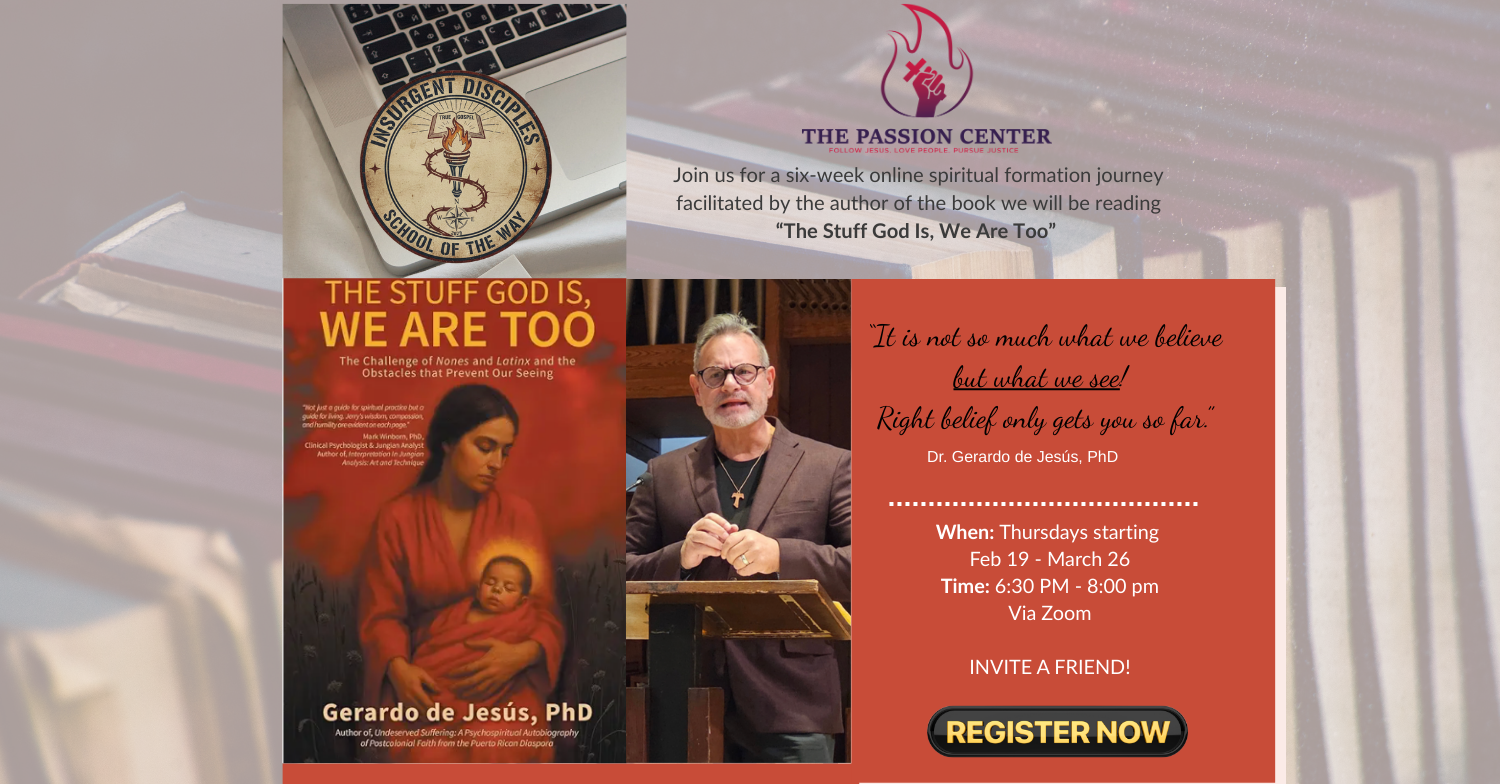
The School of the Way is not a class for talking simply of correct beliefs—it is a space for cultivating courageous lives. Rooted in the earliest name given to the followers of Jesus, “the Way,” this Thursday-night gathering is designed for those who are tired of faith that only sounds good but doesn’t show up. Here, spiritual formation is not passive or polite; it is embodied, disruptive, and deeply communal.
At The School of the Way, we learn faith as a practice, not a performance. We wrestle with Scripture, tradition, and the Spirit in ways that move us from belief to belonging to becoming. This is a space for unlearning colonial Christianity, recovering insurgent discipleship, and forming people who live the gospel publicly—through justice, love, resistance, and repair.
This pathway centers prayer, story, study, and action, grounding participants in a faith that can withstand hard questions and hard times. We are forming people who walk with Jesus beyond church walls, who choose solidarity over silence, and who understand that following the Way has always meant swimming against the current.
The School of the Way is for seekers, skeptics, survivors, and saints—anyone ready to practice a faith that costs something and gives life.
Because the Way of Jesus has never been about comfort. It has always been about transformation.
____________________________________________________________
Our first Spring session will be facilitated by a new member of the Passion Center leadership team, Rev. Dr. Gerardo de Jesús, PhD on his latest book The Stuff God Is, We Are Too!
Description of book: This book is an attempt to see God everywhere and in everyone. I speak specifically to Nones and Latinx, as well as others who have left the church in search of a greater depth to their faith. I seek to reimagine the meaning of sacrament inherited from colonial Christianity and make it personal and contextual, a way of seeing that transforms how we see ourselves, one another, and our stewardship of the earth. More than just a series of childhood church rituals, which for many holds little meaning, I seek to reclaim the notion of sacrament as a visible grace by turning to the ancient practice of contemplation as a faith-consciousness that helps us arrive at a new understanding of what a sacrament is-that is, this book is about recovering a "sacramental spirituality," a place of inner awareness that helps us to see through new eyes. What you're looking at is where you're looking from; and it's my hope this book helps you to see again, to respond to the diminished sanctity of reality, and to recover the divinity embedded in everything.
Purchase your book before we begin here.
-
Mailing Address
About
Contact
%20600px.png)